

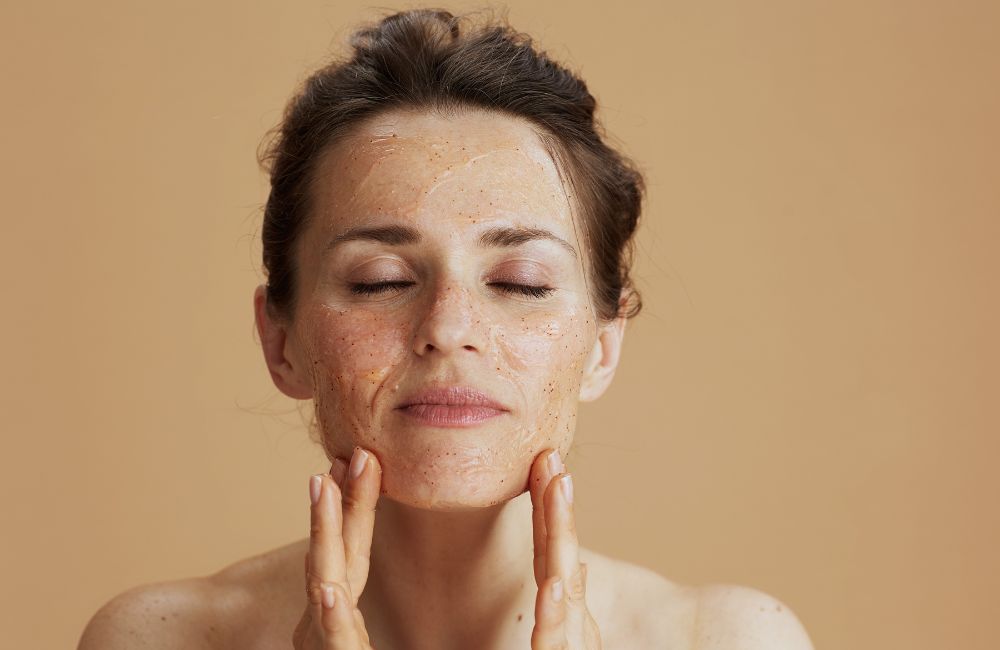
The foundation of perfect skincare is proper skin cleansing and exfoliation. To consciously develop a facial care routine, you need to include the exfoliation process, during which you remove the excess dead skin from the surface and nourish the underlying layers. Always combine the cleansing process with sun protection to achieve lasting and long-term improvement in your skin’s quality. With a well-chosen exfoliant, you can achieve outstanding results even in a short time if you follow a few basic rules.
To select the right exfoliant for your home skincare routine, it’s useful to understand the differences between AHA, BHA, and PHA acids and their effects on your skin type.
What is each exfoliant used for?
The primary role of exfoliants is to support the skin’s natural renewal processes, including stimulating collagen production, which helps maintain youthful, healthy skin function.
There are three groups of acids involved:
-
AHA (Alpha Hydroxy Acid), such as glycolic acid, is better for anti-aging purposes, against wrinkles and pigmentation spots. AHA excels primarily in anti-aging and is ideal for aging, sun-damaged and/or dry, dull skin. By removing dead skin cells from the outermost layer, it promotes natural skin renewal, fades pigmentation and brown discolorations (e.g., post-acne dark spots), and enhances the skin’s moisture retention. AHA works well for all skin types but is better avoided on rosacea-prone skin.
-
BHA (Beta Hydroxy Acid), also known as salicylic acid, helps with skin problems caused by clogged pores (blackheads, pimples):
It’s great for those struggling with blackheads, pimples, and enlarged pores because it penetrates deep into the pores to exfoliate from within, helping to clear them and prevent re-clogging. Salicylic acid exfoliants are excellent for normalizing pore size and have significant anti-inflammatory properties. For this reason, BHA is also recommended for exfoliating rosacea-prone skin: it reduces redness and results in more even skin tone.
- PHA (Polyhydroxy Acid), such as gluconolactone, is best for exfoliating sensitive skin and also helps with moisture retention. It also has anti-aging effects, though perhaps less intense. It’s a good choice for sun-damaged and/or dry, dull skin. It supports natural skin renewal, fades brown spots, and enhances moisture retention. PHA is gentler than AHA, making it ideal for sensitive or rosacea-prone skin.
While scrubs remove dead skin cells mechanically from the surface (which can cause minor micro-injuries), exfoliants work more gently by loosening the connections between dead skin cells and also offer additional benefits.
Why is it so important to support the skin renewal process?
Because if this process slows down for any reason (sun damage, genetic predisposition, aging, or skin becoming too dry or too oily), your skin will look duller, lifeless, and be more prone to various skin problems. In such cases, your skin needs help!
Keep these in mind when choosing an exfoliant!
- Know the exact active ingredient content! Only choose home chemical exfoliants where the acid concentration is clearly stated!
- Know the product’s pH value! The pH determines whether your chemical exfoliant will work optimally. Home chemical exfoliants work best in a mildly acidic environment with a pH between 3 and 4.
- Check what other ingredients it contains! Always evaluate a skincare product based on the full INCI list (ingredient list).
- Pay attention to the texture! Keep two things in mind: first, choose a texture suitable for your skin type (the rule is, the oilier your skin, the lighter the texture you should choose; the drier your skin, the creamier the texture is better), and second, if you choose a liquid texture, it works well on all skin types, absorbs quickly and effectively, and also makes layering easier.
You can incorporate several types of exfoliants into your routine at once; for example, you can use both AHA and BHA exfoliants if your skin is primarily prone to blackheads and enlarged pores but also has post-acne spots and anti-aging is a priority for you.
Gentle AHAs for frequent use and/or beginners:
If you’re just starting exfoliation, or anti-aging is important to you mainly as prevention (for example, if you’re in your twenties), or if dehydration is an issue, a gentle exfoliating gel is an excellent idea. Beauty of Joseon - Apricot Blossom Peeling Gel - Exfoliating gel
If you’re new to exfoliation but specifically interested in anti-aging, it’s worth starting with a lower concentration, daily-use AHA. Anua - Heartleaf LHA Moisture Peeling Gel Facial Scrub - Hydrating exfoliant
Medium-strength, moderately strong AHAs for more frequent use:
If your skin is a bit more resilient and you want to use a slightly stronger glycolic acid daily or a few times a week, try Haruharu Wonder - Centella 3% PHA Gentle Liquid Exfoliating Serum - Exfoliating facial serum
Tip: A true best practice is a combination of a gentler daily AHA + a stronger AHA used a few times a week. They greatly enhance anti-aging effects and each other’s effectiveness, so if anti-aging is your main focus, this could be a great approach to try.
