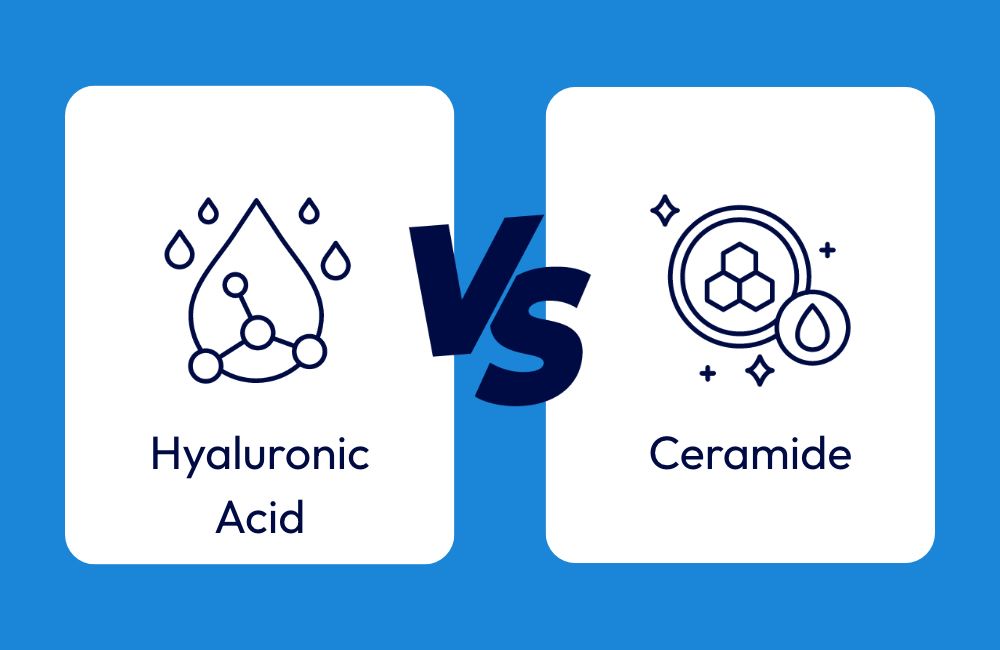
Hyaluronic acid or ceramides? If you’re looking for a moisturizing serum or face cream, you’ve probably come across both ingredients. Both are popular in Korean skincare, but they don’t do the same thing. Hyaluronic acid primarily helps bind moisture, while ceramides are important components of the skin’s natural protective barrier.
But which is the better choice? It depends on whether your skin is dehydrated, dry, or sensitive, or needs support for its skin barrier. Let’s look at the difference between the two active ingredients, when to choose each one, and whether you can use them together!
💧 Hyaluronic acid or ceramides - what’s the key difference?
The two ingredients support the skin’s hydration and comfort in different ways.
Hyaluronic acid is a water-binding ingredient that can help maintain the skin’s moisture levels. Ceramides are lipids that form part of the skin’s natural protective barrier and play an important role in the proper functioning of the skin barrier.
Simply put:
- Hyaluronic acid: helps bind moisture.
- Ceramides: support the skin’s protective barrier and help retain moisture.
So you don’t necessarily have to choose between them. In many cases, the best solution may be to include both ingredients in your skincare routine.
1. Hyaluronic acid - if your skin is dehydrated and feels tight
Hyaluronic acid is one of the best-known moisturizing ingredients, found in many Korean serums, toners, essences, and face creams. Its most important property is its ability to bind water, so it can help maintain the skin’s hydration. When used in the right formula, it can help your skin feel plumper, smoother, and more supple.
What signs may indicate that your skin needs hyaluronic acid?
- Your skin often feels tight after cleansing.
- Your skin looks dull and tired.
- You notice fine, superficial lines caused by dryness.
- Your skin is both oily and dehydrated.
- You’re looking for a lightweight, fast-absorbing moisturizer.
An important distinction is that dehydration is not a skin type but a temporary or persistent skin condition. Oily skin can also be dehydrated, so hyaluronic acid can be useful for more than just dry skin.
How to use hyaluronic acid
Hyaluronic acid serum is generally best applied after cleansing your face and using toner. Applying it to slightly damp skin can be helpful, and then use a moisturizer to help lock in moisture.
Remember: hyaluronic acid does not replace moisturizer. If you use only a moisture-binding serum but leave out a suitable moisturizer from your routine, you may not achieve the level of comfort you’re looking for.
2. Ceramides – when your skin’s protective barrier needs support
Ceramides are important components of the skin’s natural protective barrier. Among the lipids found in the outer layer of the skin, ceramides play a key role. The skin barrier helps protect the skin from external environmental factors and reduce excessive water loss. If the barrier’s function is impaired, the skin can become drier, more sensitive, and uncomfortably tight.
What signs should you look for when choosing a ceramide product?
- Your skin is often dry and feels tight.
- You experience unpleasant tightness after cleansing or skincare.
- Your skin reddens easily or reacts sensitively to certain products.
- It often flakes and feels rough to the touch.
- Your skin has started to feel different after using too many exfoliants or active ingredients.
Moisturizers containing ceramides can be especially useful if, alongside hydration, supporting your skin’s natural protective barrier is important to you.
How to use ceramides
You’ll most commonly find ceramide-containing products in moisturizers, but they may also be found in serums and other skincare products. You can generally apply a ceramide cream after your serums in your routine. It can be used in the morning and evening, following the product instructions. You don’t necessarily need to choose a very rich cream. Depending on the texture and overall formulation, you can also find a suitable ceramide product for oily or combination skin.
3. Hyaluronic acid or ceramides – which should you choose for your skin type?
Now for the most important question: which ingredient is best suited to your skin’s current condition?
For dry skin: it’s worth using both
Dry skin often needs more than just hydration; it may also need support for its protective barrier. Hyaluronic acid can help lock in moisture, while ceramides can help the skin barrier function properly. That’s why a combination of a hyaluronic acid serum and a ceramide moisturizer may be a good choice for dry skin.
📚 Related article: Moisturizer for dry skin – how to choose the right face cream?
For oily skin: hyaluronic acid, but you don’t have to give up ceramides either
If your skin is oily but sometimes feels tight or dehydrated, a lightweight hyaluronic acid serum may be a good choice. Ceramides can also be beneficial, especially if your skin’s protective barrier needs support. In that case, choose a lightweight lotion or gel moisturizer. Most importantly, don’t skip moisturizing altogether just because your skin tends to look shiny.
📚 Related article: Moisturizer for oily skin – does your skin really need it?
For sensitive skin: ceramides may be especially worth considering
Supporting the skin’s protective barrier can be especially important for sensitive skin. Moisturizers containing ceramides can therefore be a good starting point. Hyaluronic acid can also be incorporated into your routine if your skin tolerates it well. Consider choosing a simple formula with few potentially irritating ingredients. Introduce new products gradually and observe how your skin reacts.
📚 Related article: Moisturizer for sensitive skin – which ingredients should you look for?
For dehydrated skin: hyaluronic acid is a good starting point
If your skin is oilier but still feels tight, looks dull, or seems dehydrated, consider looking for a product containing hyaluronic acid. But hydration doesn’t stop at serum. Depending on your skin’s needs, a lightweight moisturizer can also be an important part of your routine.
4. Can you use hyaluronic acid and ceramides together?
Yes! In fact, the two ingredients can complement each other well, since they serve different purposes.
Hyaluronic acid can help retain moisture, while ceramides support the skin’s protective barrier. Used together, they can therefore be part of a well-considered hydrating routine.
A simple morning routine with hyaluronic acid and ceramides
- Facial cleansing: use a gentle cleanser.
- Toner: if you like, choose a hydrating toner.
- Hyaluronic acid serum: apply the product according to the instructions.
- Ceramide moisturizer: help maintain your skin’s hydration and protective barrier.
- Sunscreen: Use a broad-spectrum sunscreen as the last step in your morning routine.
Simple evening routine
- Remove your makeup and sunscreen.
- Cleanse your face.
- Use a hyaluronic acid serum.
- Apply a moisturizer containing ceramides.
Of course, you don’t need to use a separate product for every step. If your moisturizer already contains hyaluronic acid and ceramides, you can combine both ingredients in a single product.
5. What other ingredients can you combine them with?
Along with hyaluronic acid and ceramides, other ingredients can also help you tailor your routine to your skin’s needs.
- Panthenol: a common ingredient in moisturizing and skincare formulas. It can help maintain skin comfort, especially for dry or sensitive skin.
- Glycerin: a classic humectant found in many moisturizing products.
- Squalane: an emollient ingredient that may help improve the comfort of dry, rough skin.
- Centella asiatica: a popular botanical ingredient in Korean cosmetics, often used in skincare formulas designed to soothe the skin.
The key is not to try to use as many active ingredients as possible at once. Instead, choose products whose formulas and textures suit your skin’s current needs.
📚 If you’d like to learn about the most important moisturizing ingredients, read our article Moisturizer Ingredients – Which Active Ingredients Really Hydrate the Skin? as well.
6. What mistakes should you avoid when using hyaluronic acid and ceramides?
The two ingredients can generally be incorporated into your daily routine, but there are a few things to keep in mind.
Don’t expect one serum to solve every problem! If your skin is dehydrated, hyaluronic acid may help, but you may also need a suitable moisturizer.
Don’t overlook your skin barrier! If your skin is dry, feels tight, or has become more sensitive, it doesn’t necessarily need more active ingredients. In that case, it’s worth simplifying your routine and focusing on gentle cleansing and hydration.
Don’t choose based on just one ingredient! Just because a product contains ceramides or hyaluronic acid doesn’t mean its overall formula is right for your skin.
Don’t introduce too many new products at once! If you try several products, it will be harder to determine which one may have caused an unpleasant reaction.
❓ Frequently Asked Questions
Which hydrates better: hyaluronic acid or ceramides?
The two ingredients support skin hydration in different ways. Hyaluronic acid binds water, while ceramides are important components of the skin’s protective barrier. They aren’t really substitutes for one another; rather, they complement each other.
Can I use a ceramide cream after a hyaluronic acid serum?
Yes. This is a common combination that works well. Apply the serum before the cream, following the products’ usage instructions.
Which is better for dry skin: hyaluronic acid or ceramides?
For dry skin, both can often be beneficial. Hyaluronic acid can help retain moisture, while ceramides support the skin’s protective barrier.
Can I use a ceramide cream on oily skin?
Yes. Ceramides aren’t just for dry skin. Supporting the skin’s protective barrier can also be important for oily skin. Choose a product with a lightweight texture that feels comfortable on your skin.
How often should I use hyaluronic acid?
Products containing hyaluronic acid can generally be used daily, even morning and evening. Always follow the product’s usage instructions and pay attention to how your skin reacts.
Can ceramides help with a damaged skin barrier?
Ceramides are important components of the skin’s natural protective barrier, so products containing ceramides can be a useful part of a routine aimed at supporting the skin barrier. However, if you experience persistent irritation or inflammation, it’s worth consulting a dermatologist.
Summary: hyaluronic acid or ceramides?
The choice depends on what your skin needs.
- Hyaluronic acid: if your main goal is to support hydration and moisture retention.
- Ceramides: if you want to focus on supporting the skin’s natural protective barrier.
- Hyaluronic acid and ceramides together: if you want to include both hydration and skin barrier support in your routine.
One advantage of Korean skincare is that you can find plenty of products that combine multiple ingredients. You don’t necessarily need to build a complicated routine: a few well-chosen products may be enough.
To find a moisturizing formula that suits your skin, explore K-Beauty For You’s range of Korean moisturizing creams and choose according to your skin’s needs!