

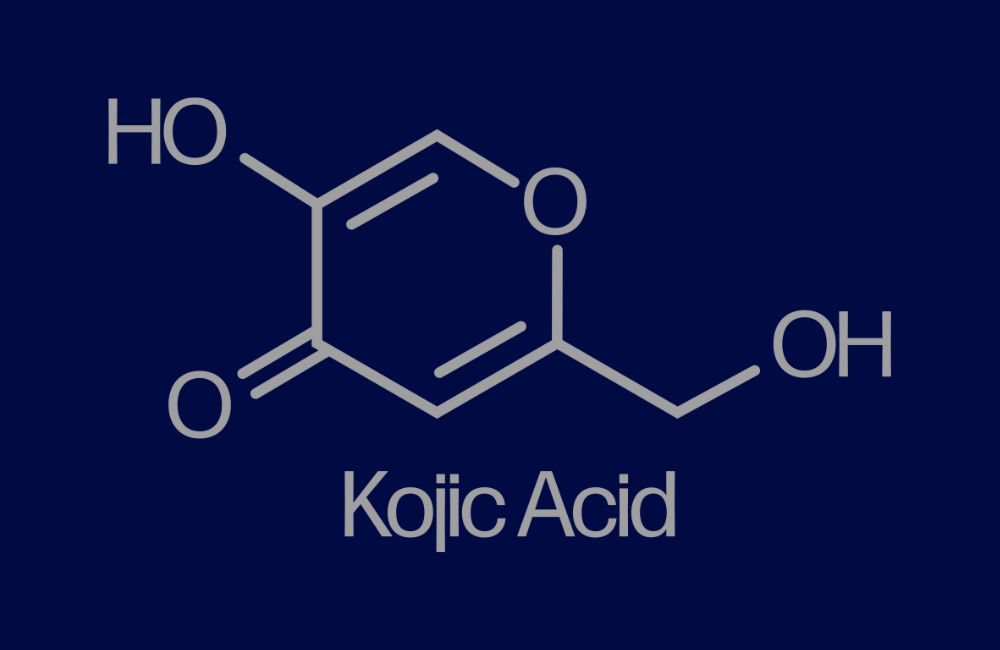
If you have ever struggled with stubborn brown spots – whether it's an old acne mark, a reminder of summer sunbathing, or melasma – then you have surely heard of vitamin C or retinol. But there is a quiet hero in spot fading, a big favorite in Korean cosmetics, that we talk about far too little. This is kojic acid.
Many are afraid of it because of its name ("acid"), but in reality, it does not work as an exfoliating acid (like AHA or BHA), but as a pigment blocker.
Today we’re having a basic lesson: let’s clarify what kojic acid is, how it works, and why it might be the missing link in your spot-free routine! 👩🏫
What is kojic acid? 🍶
Kojic acid has a very exciting history and – you won’t be surprised – it is closely connected to Asian traditions.
- Origin: This active ingredient is extracted from fungi, but it is actually a byproduct of rice fermentation. It was discovered when experts noticed that the hands of workers making sake (Japanese rice wine) were noticeably white, soft, and spot-free.
- Chemistry: Although it has "acid" in its name, its primary role in skincare is not exfoliation (though it has a mild effect), but blocking chemical processes in the deeper layers of the skin.
So, the answer to the question: it is a naturally derived, fermented molecule that targets the root of spots.
The effect of kojic acid: How does it remove spots? 🛑
Its effect is not magic, but pure biochemistry. To understand it, you need to know how brown spots (melanin) form.
There is an enzyme in our skin called tyrosinase. Imagine it as a small factory: when the skin is exposed to sunlight or inflammation (like acne) occurs, the tyrosinase enzyme "switches on" and starts producing melanin (pigment).
This is where kojic acid steps in:
- The blocker: This molecule can paralyze the tyrosinase enzyme. It simply switches off the factory.
- The result: If the enzyme doesn’t work, the skin cannot produce excess melanin. Existing spots begin to fade (as the skin naturally renews), and new ones do not form.
In summary, the benefits of kojic acid:
- Fades hyperpigmentation: Sun spots, age spots, melasma.
- Treats PIH: The annoying brown/red marks left after acne.
- Antioxidant: Helps neutralize free radicals that age the skin.
Who is recommended to use kojic acid? ✅
Since this is a potent ingredient, it’s good to know who it’s really for:
- Those with uneven skin tone: If your face looks "speckled" because of spots.
- Those struggling with acne-prone skin: Not for active pimples, but for the remaining scars (spots).
- Those dealing with melasma: Kojic acid is often an alternative to the controversial hydroquinone because it is safer yet very effective.
How to incorporate it into your routine? - Tips 📝
Kojic acid is effective, but there are a few rules to follow to avoid irritating your skin.
1. Look for serums!
This ingredient can be unstable, so it is often combined with other substances. The best serums contain, for example:
- Glycolic acid (AHA): The acid removes surface pigmented skin, while kojic acid blocks replenishment. A great duo!
- Niacinamide: Soothes the skin while enhancing the spot-fading effect (see the new Purito Seoul serums!).
- Tranexamic acid: Another modern spot-fader that works excellently together with kojic acid.
2. Use frequency wisely
Start 2-3 times a week, in the evening. If your skin tolerates it well, you can increase the frequency. Sensitive skin types should introduce it cautiously, as it can rarely cause contact dermatitis (itching).
3. The most important rule: SUN PROTECTION! ☀️
I can’t stress this enough! The effect of kojic acid is based on inhibiting melanin production. If you don’t use sunscreen, the sun’s rays will immediately restart the "factory," and all your work will be wasted. Moreover, unprotected skin can become even more sensitive to sunburn.
Kojic acid vs. other active ingredients
- Kojic acid vs. vitamin C: Both brighten, but in different ways. You can use them together (e.g., vitamin C in the morning, kojic acid in the evening) for maximum effect.
- Kojic acid vs. arbutin: Both are tyrosinase inhibitors and gentle. They often appear together in products for a synergistic effect.
Summary: Patience creates spot-free skin!
Now you know why so many people rave about this ingredient: kojic acid is a miracle derived from fungi/rice that switches off the pigment factory in your skin. If you struggle with stubborn spots and vitamin C alone hasn’t been enough, it’s worth giving it a chance!
Remember: spot fading is a marathon, not a sprint. The effect usually becomes truly visible after 4-8 weeks. Be patient and apply sunscreen! 😉
Want to try it?
Discover the latest kojic acid serums at kbeautyforyou.hu here!
