Retinal is an exciting active ingredient in anti-aging skincare that can help address fine lines, skin texture, and the visible signs of aging. But what exactly is retinal, how does it differ from retinol, how should you introduce it into your routine, and who might find it a good choice? In this guide, we have gathered everything you need to know about using retinal.
🌟 What is retinal?
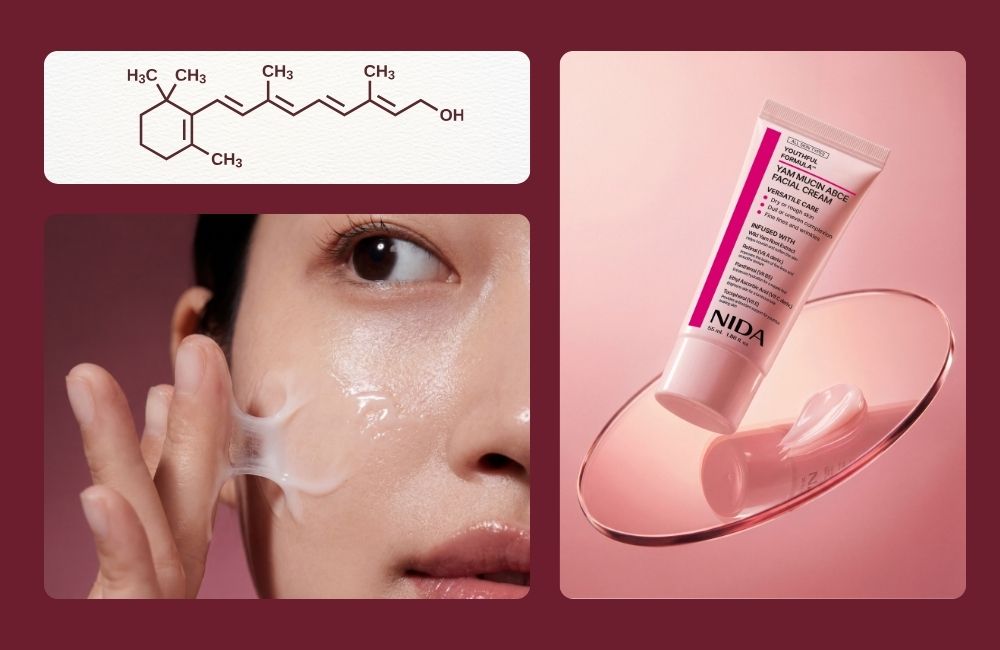
Retinal, also known as retinaldehyde, belongs to the family of vitamin A derivatives, or retinoids. Vitamin A derivatives have long been studied for addressing the visible signs of skin aging. Retinal is distinctive because it is a precursor that is converted into retinoic acid in the skin, exerting its effects through a step that leads to the biologically active form.
Retinoids include several different ingredients, such as:
- retinyl esters,
- retinol,
- retinal,
- retinoic acid.
These are not the same active ingredients, nor are they equally potent.
Retinal is therefore not simply “another name for retinol,” but a distinct vitamin A derivative.
✨ What is retinal good for?
It is primarily used in anti-aging and skin texture-improving routines.
Research suggests that using retinaldehyde may improve, among other things, the skin’s texture and hydration, as well as some visible signs of aging.
The most common goals are:
- caring for the appearance of fine lines and wrinkles,
- improving uneven skin texture,
- improving the appearance of dull skin,
- supporting the skin’s renewal processes,
- reducing the visible signs of aging.
However, it is important not to expect immediate results from a cosmetic product. With retinoids, consistent and properly established use is much more important than using the strongest product possible.
💡 Retinal or retinol – what is the difference?
This is one of the most common questions when someone first encounters the active ingredient retinal.
Both are vitamin A derivatives, but they are not the same ingredient.
In the skin, both retinol and retinal must undergo further conversion steps to become retinoic acid, which is responsible for the biological effects of retinoids. Retinal is a more direct precursor than retinol.
Simply: Retinol → Retinal → Retinoic acid
However, this does not mean that retinal is always “stronger” or automatically a better choice.
Retinal for beginners – how to introduce it into your routine
If you have never used retinal or another retinoid before, the most important rule is: start slowly.
Retinoids can cause irritation, dryness, peeling, or an uncomfortable tight feeling, especially when someone uses too much product or uses it too often at once.
The American Academy of Dermatology also recommends gradually introducing retinoids, especially to reduce irritation.
Step 1: start a few times a week
As a beginner, you do not need to use retinal every evening.
For example, try: twice a week → then gradually increase the frequency if your skin tolerates it well.
The goal is not to use it as often as possible, but to find a frequency at which your skin feels comfortable.
Step 2: use a small amount
More does not mean better results. A thin, even layer is sufficient. Always follow the instructions for use provided with the product.
Step 3: moisturize
Proper hydration is especially important in a retinal routine. If your skin is more sensitive, you can also use the following method: moisturizer → retinal → moisturizer. This may help reduce irritation.
Step 4: observe your skin's reaction
Mild dryness or sensitivity may occur, but if you experience severe irritation, a burning sensation, or significant redness, it is advisable to take a break.
💡 When should you use it?
Retinal is generally best used in your evening routine.
A simple evening routine, for example:
Cleanser → hydrating toner → serum → retinal product → moisturizer
However, you do not need to use every step.
A minimalist routine can work perfectly well:
Cleanser → retinal product → moisturizer
The most important thing is not to skip sun protection in your daytime routine when using retinal.
Retinal and sunscreen – why is SPF important?
If you use retinal, daytime sun protection is an especially important part of your routine. When using retinoids, the American Academy of Dermatology recommends appropriate sun protection during the day, including sunscreen.
Therefore, alongside an evening retinal routine, your morning routine should be based on: moisturizer → SPF
Sunscreen is important not only because of your retinal routine: UV radiation also plays a significant role in skin aging.
Can it be used on sensitive skin?
It depends on the individual.
Based on research examining retinaldehyde, the active ingredient may be well tolerated in certain formulations, and retinaldehyde was well tolerated in previous clinical studies.
However, this does not mean that every sensitive skin type can use retinal without problems.
If your skin:
- is very dry,
- is irritated,
- has a damaged skin barrier,
- is severely reddened,
- or is peeling,
then it is best to restore the skin’s comfort and hydration first.
Retinoids are not necessarily suitable for everyone, so in cases of persistent or severe skin irritation, it is advisable to consult a dermatologist.
Which active ingredients can it be used with?
Retinal can be easily incorporated into a simple, hydrating routine.
Retinal + hyaluronic acid
Moisturizing products containing hyaluronic acid can help maintain the skin’s hydration.
Retinal evening + hydrating serum + cream can be a good starting point.
Retinal + niacinamide
Niacinamide is a versatile cosmetic ingredient that can be easily incorporated into a retinal routine.
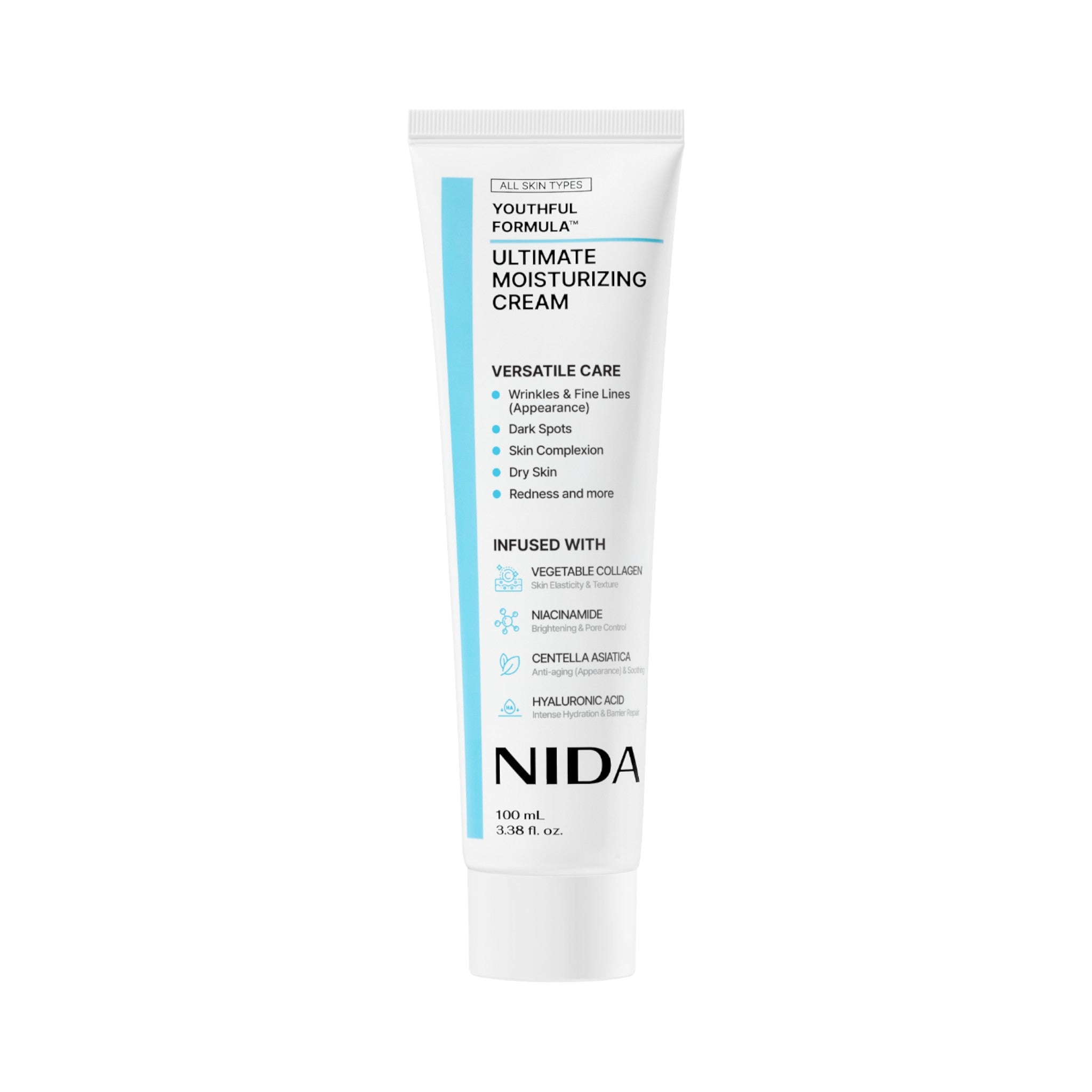
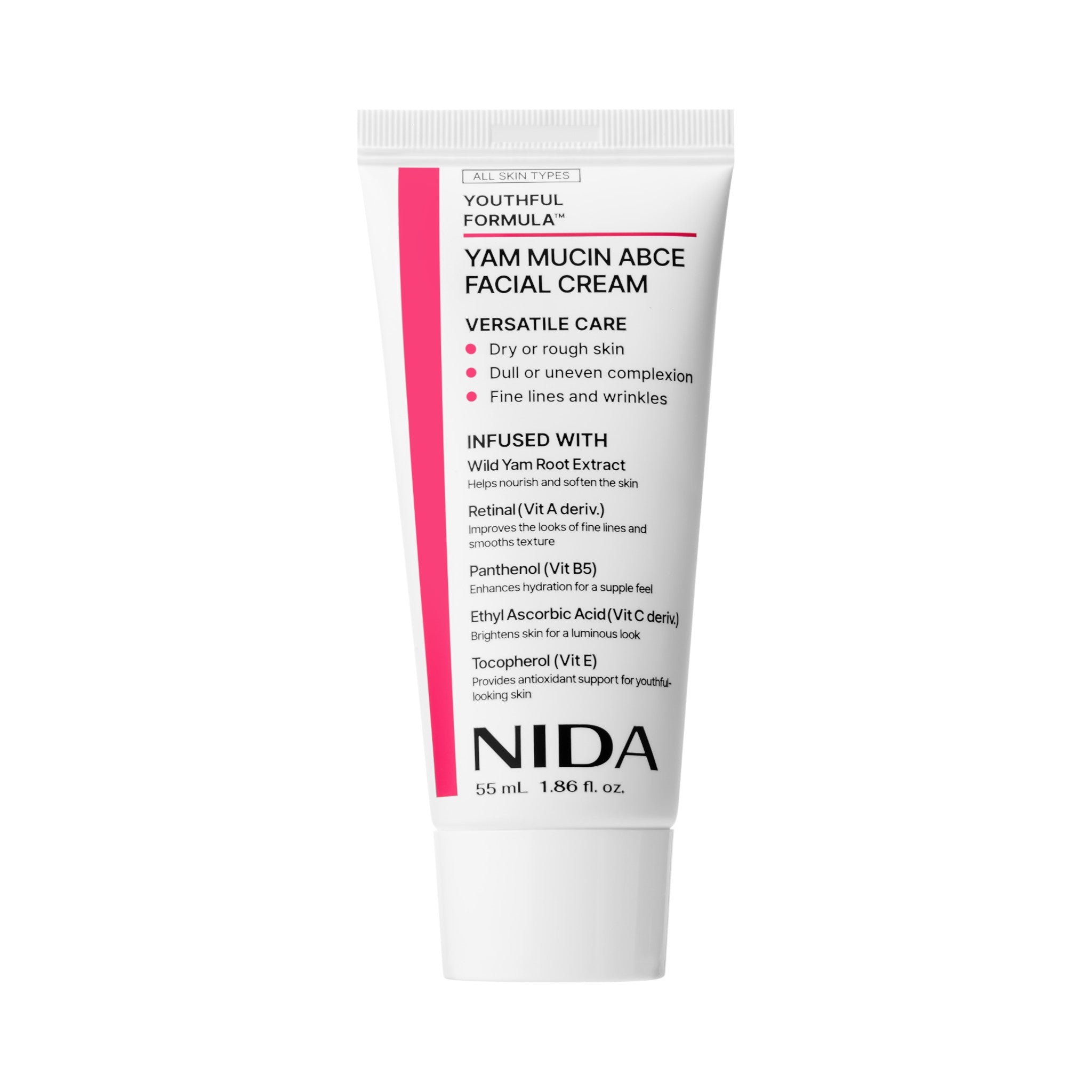
The NIDA Youthful Formula™ Yam Mucin ABCE Facial Cream contains niacinamide and retinal, for example.
Retinal + peptides
A moisturizer or serum containing peptides can also fit well into an anti-aging routine. Here too, however, it is worth considering the full formula, rather than simply whether it contains a single active ingredient.
Which active ingredients should you not use on the same evening?
As a beginner, it is not advisable to combine too many active ingredients in a single routine. Be especially cautious if your routine includes several exfoliating acids or other potentially irritating active ingredients. For example, if you are new to using retinal, a simpler approach may be:
- retinal evening, and
- exfoliation evening
alternating them instead of using everything at once. This also makes it easier to observe how your skin reacts to each product.
NIDA retinal – how can it be incorporated into your routine?
In NIDA’s range, retinal is one of the key ingredients in the Youthful Formula™ Yam Mucin ABCE product line.
The NIDA Youthful Formula™ Yam Mucin ABCE Facial Cream also contains retinal, niacinamide, panthenol, vitamin E, and a vitamin C derivative.
An interesting feature of the formula is Yam Mucin, an ingredient derived from wild yam root.
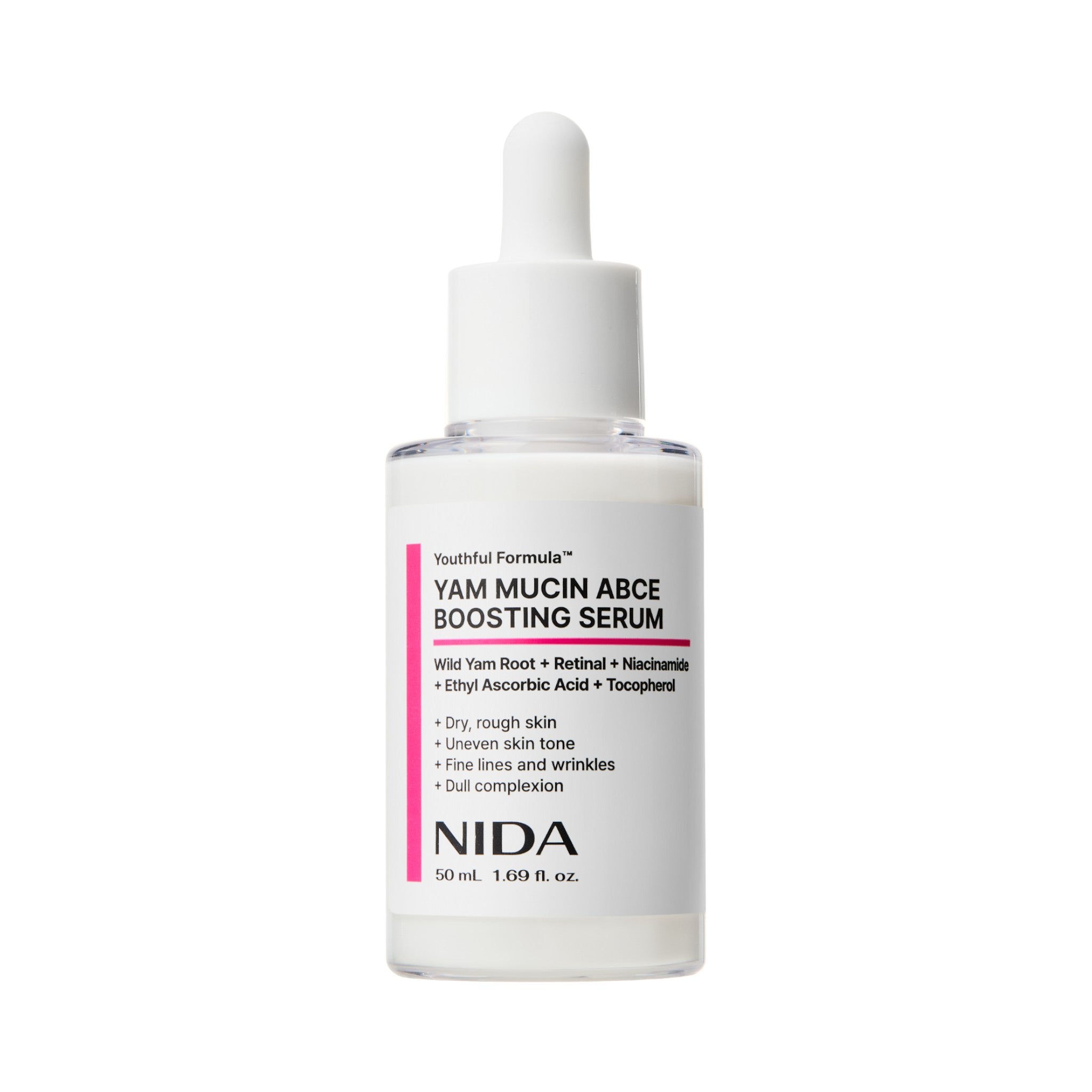
NIDA Youthful Formula™ Yam Mucin ABCE Boosting Serum
NIDA also offers a retinal-containing serum in the same product range.
The Youthful Formula™ Yam Mucin ABCE Boosting Serum contains niacinamide, panthenol, a vitamin C derivative, and vitamin E in addition to retinal.
NIDA retinal routine for beginners
If you would like to incorporate retinal into your NIDA routine now, you do not need to start using several active products right away.
A simple evening routine could be:
1. Facial cleansing: Remove makeup, sunscreen, and impurities.
2. Hydrating serum: Choose a serum that primarily hydrates and supports your skin’s comfort.
3. NIDA retinal product: Start a few times a week, then gradually increase the frequency of use if your skin tolerates it well.
4. Moisturizer: Use a moisturizer at the end of your routine.
If you are not yet familiar with the full NIDA product range: NIDA Korean cosmetics: an introduction to the brand, active ingredients, and the NIDA skincare routine
When can you expect results from retinal?
The ingredient is not a cosmetic ingredient that “works overnight.” Changes in the appearance of the skin are gradual, so consistency is more important than starting intensely. That is why it is worth thinking in weeks and months, not just a few days.
Using retinal in summer – is it possible or not?
Using retinal on its own does not mean that you automatically have to skip it in summer. The key is proper sun protection and how well your skin tolerates the routine. If you spend a lot of time in the sun, are on holiday, or your skin is more sensitive than usual, it is especially important to pay attention to sun protection and signs of irritation.
However, do not build a retinal-based anti-aging routine without SPF.
During pregnancy – can it be used?
Not recommended.
Retinal is also a vitamin A derivative, so it should be avoided during pregnancy. If you are pregnant, planning to have a child, or are unsure whether a particular cosmetic ingredient is suitable for you, the safest option is to consult a doctor or dermatologist.
The most common mistakes when using retinal
1. Using it too often: You do not need to use retinal every night for it to work.
2. Using too many products at once: If you introduce retinal, acids, potent vitamin C, and several other active ingredients at the same time, it will be difficult to determine what is causing any irritation.
3. Using too much product: A larger amount does not automatically speed up the results.
4. Skipping hydration: Hydration is especially important in a retinal routine.
5. Skipping sunscreen: Consistent UV protection is one of the most important elements of an anti-aging routine.
6. Expecting results too quickly: Skincare is a long-term process. A consistent, well-tolerated routine is more valuable than an aggressive start.
Summary
Retinal is an interesting vitamin A derivative that may have a place in routines focused on anti-aging and improving skin texture. If you are just getting acquainted with this active ingredient, the most important thing is to introduce it gradually: start with a low frequency, moisturize properly, and always use sunscreen during the day.
The NIDA Youthful Formula™ Yam Mucin ABCE Facial Cream and Boosting Serum are NIDA products that contain retinal in their formulas, making them an interesting option to incorporate into a thoughtfully designed anti-aging routine.
Frequently asked questions about retinal
What is retinal?
Retinal, or retinaldehyde, is a vitamin A derivative primarily used in anti-aging and skin texture-improving routines.
Retinal or retinol—which is better?
It cannot be generally stated that one is better for everyone. Both are vitamin A derivatives, but they are converted differently in the skin, and their effects are also influenced by the concentration, formula, and individual tolerance.
How often should I use retinal?
As a beginner, it is best to start a few times a week and then gradually increase the frequency if your skin tolerates it well.
Can I use retinal on sensitive skin?
It is possible, but it depends on individual tolerance. If your skin barrier is irritated or damaged, it is best to focus first on soothing and hydrating the skin.
Can retinal be used during pregnancy?
It is not recommended. Retinal is a vitamin A derivative, so it should be avoided during pregnancy.
When should I use retinal?
Generally, in your evening routine. In the morning, proper sun protection is especially important.
Which NIDA product contains retinal?
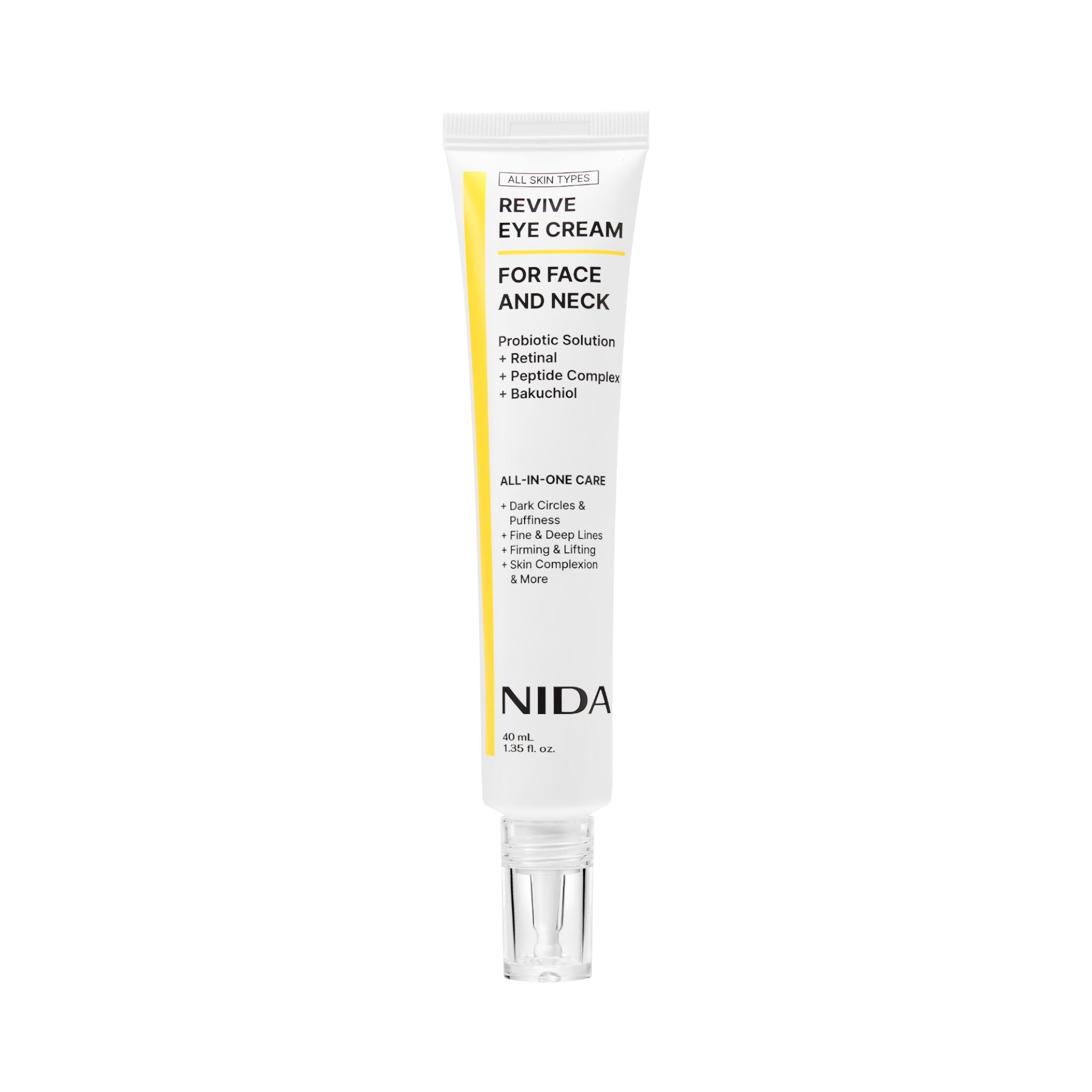
Both the NIDA Youthful Formula™ Yam Mucin ABCE Facial Cream and the Youthful Formula™ Yam Mucin ABCE Boosting Serum contain retinal.