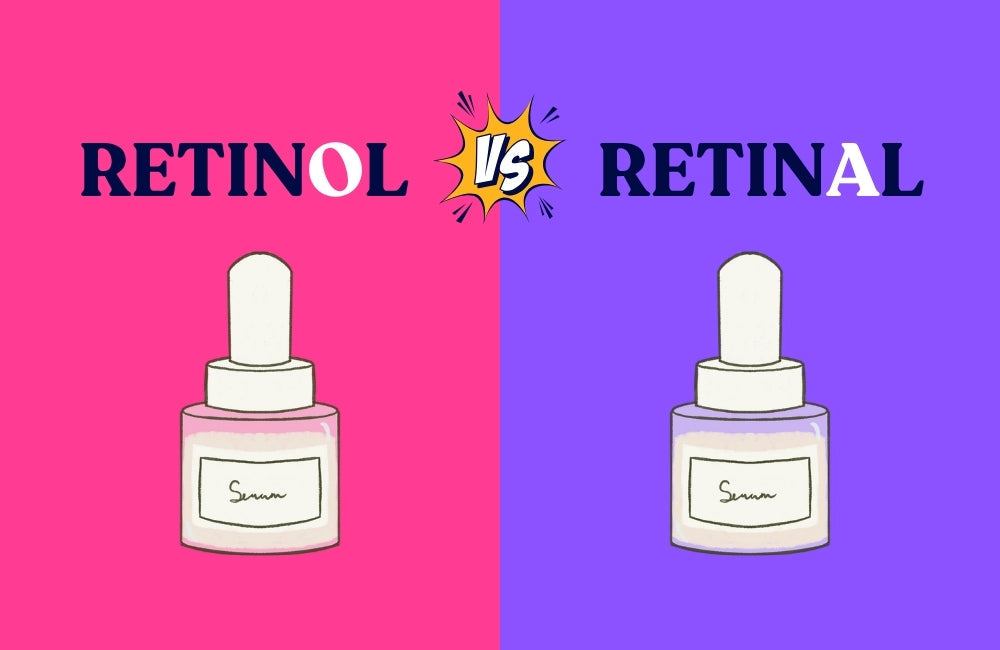
Retinal and retinol are both vitamin A derivatives and have long been popular ingredients in anti-aging skincare. But what is the difference between them, which is more effective, and which should you choose if you want to incorporate one into your routine now?
Retinal or retinol – in brief
If you only want to know the most important difference:
Retinal is one step closer to the retinoic acid active in the skin than retinol.
Both belong to the retinoid family and exert their effects in the skin through various conversion processes. Retinol first converts into retinaldehyde and then into retinoic acid, while retinal requires only one conversion step to become retinoic acid.
However, this does not mean that retinal is always a better choice than retinol. When choosing the right active ingredient, the condition and sensitivity of your skin, the formula, and frequency of use all matter.
What is retinol?
Retinol is one of the best-known cosmetic vitamin A derivatives. It is used primarily in anti-aging products because it supports the skin’s renewal processes and may help improve fine lines, skin texture, and uneven skin tone.
However, retinol itself is not the same as retinoic acid. The skin must first convert it into retinaldehyde and then into retinoic acid to reach the active form of retinoids.
In simple terms:
Retinol → Retinal → Retinoic acid
During this process, retinol is two conversion steps away from active retinoic acid.
The advantage of cosmetic retinol products is that, with proper formulation, they can be easily incorporated into an at-home skincare routine; however, tolerance and effects may vary from person to person.
What is retinal?
Retinal—also known as retinaldehyde—is also a vitamin A derivative, but it is closer to retinoic acid than retinol is.
Simplified, the process is as follows:
Retinal → Retinoic acid
The scientific literature describes retinaldehyde as a cosmetic retinoid that may be effective in improving the signs of photoaging while generally being well tolerated.
This is one reason why retinal has recently been receiving increasing attention in modern skincare routines.
Retinal may be particularly interesting for those who want to try a more effective vitamin A derivative but do not want to turn immediately to a stronger retinoid used as a medication.
Retinal vs. retinol – what is the most important difference?
Both retinal and retinol belong to the vitamin A derivatives, or retinoids. The most important difference between them is how close they are to the retinoic acid that is active in the skin.
Retinol must undergo two conversion steps to become retinoic acid:
Retinol → Retinal → Retinoic acid
Retinal, on the other hand, requires only one conversion step:
Retinal → Retinoic acid
However, this does not mean that retinal is always “stronger” or a better choice than retinol. In terms of effectiveness, concentration, formulation, stability, individual skin tolerance, and frequency of use all play important roles.
Both ingredients are used primarily for anti-aging purposes, to reduce the appearance of fine lines and wrinkles, improve skin texture, and help even out skin tone.
Retinol is a well-known vitamin A derivative that has been used in cosmetics for a long time, while retinal has received increasing attention in modern skincare formulations in recent years.
Therefore, the question is not necessarily “which one is stronger?” but rather which one is better suited to your skin, your current routine, and your goals.
Which is more effective: retinal or retinol?
There is no single answer that applies to everyone.
From a biochemical perspective, retinal is closer to retinoic acid, so it may seem logical to assume that it is more effective. Research does indeed show that retinaldehyde has significant cosmetic potential, including for improving signs of skin aging and photoaging.
However, the “better” active ingredient is the one your skin tolerates well and that you can use consistently.
A well-tolerated retinol used regularly may be much more beneficial than a retinal product that you can use only occasionally because of irritation.
That is why, when choosing, you should not look only at which active ingredient seems stronger.
Retinal or retinol for beginners?
If you are just becoming familiar with vitamin A derivatives, you do not necessarily need to start with the strongest product.
The most important rule:
start slowly and gradually build up your use.
For example:
Weeks 1–2
Use retinal or retinol twice a week.
Weeks 3–4
If your skin tolerates it well, you can increase use to 3 times a week.
Later
If there is no significant irritation, you can gradually increase the frequency further.
You do not need to use a retinoid every evening to achieve long-term results.
If your skin feels tight, becomes very red, burns, or flakes, it is worth reducing the frequency and paying more attention to hydration.
Retinal or retinol for wrinkles?
Both ingredients are popular in anti-aging skincare.
Retinoids can affect skin renewal processes and collagen-related processes, which is why they have long been studied in cosmetic and dermatological literature for addressing signs of photoaging, such as fine lines and wrinkles.
Retinal may be a particularly interesting choice if you want to add a more targeted anti-aging ingredient to your routine.
However, it is important to note: wrinkles do not appear overnight, so you should not expect quick results from retinoids either. Consistent use and proper sun protection are much more important in the long term than using as many active ingredients as possible at the same time.
Retinal or retinol for dark spots?
Retinoids may also be beneficial for uneven skin tone and certain pigmentation concerns by supporting skin renewal.
However, if you want to create a comprehensive routine for dark spots, you do not need to rely exclusively on a single active ingredient.
Alongside retinal or retinol, ingredients such as the following may also play a role:
- niacinamide,
- vitamin C derivatives,
- tranexamic acid,
- alpha-arbutin.
Most importantly, use appropriate daytime sun protection, as UV radiation plays a significant role in photoaging and the development of pigmentation.
Retinal and retinol for sensitive skin
Using vitamin A derivatives may cause irritation, so gradual introduction is especially important for sensitive or easily reddened skin.
Dermatological recommendations also emphasize introducing it gradually and using a moisturizer. If your skin is currently irritated, inflamed, or very dry, it is worth first restoring your skin’s comfort and barrier function.
A simple rule:
Do not start using retinal when your skin is already sensitive or irritated.
Can retinal and retinol be used together?
Generally, there is no need to use both retinal and retinol in the same routine.
For example, if you switch to retinal, you can safely stop using retinol. Using the two vitamin A derivatives together does not necessarily produce better results, but it may increase the risk of irritation.
In skincare, the goal is not to use as many active ingredients as possible at the same time, but to create an effective, tolerable, and sustainable routine in the long term.
What active ingredients can retinal be combined with?
Retinal can be easily incorporated into a hydrating, barrier-supporting routine.
Hyaluronic acid
Hydrating ingredients can help make a retinoid routine more comfortable.
Niacinamide
Niacinamide is a versatile ingredient that is also commonly found in hydrating and barrier-supporting routines.
Peptides
Peptides are also frequently used in anti-aging formulas, making them a good fit for a comprehensive routine focused on mature skin.
Moisturizing cream
Proper hydration is especially important when using retinal. If necessary, you can apply a simple, soothing moisturizer over the retinal product.
What should you not use directly alongside retinal?
If you are just starting to use retinal, it is not advisable to layer several potent active ingredients on the same evening.
Be especially careful with higher-concentration acids and other highly active products.
The goal is not to address every concern at once in a single evening routine.
Less is often more.
For example, if you use retinal in the evening, a simple routine may be enough:
cleanser → retinal → moisturizer
NIDA retinal – which product should you choose?
NIDA also offers products containing retinal, so if you want to build your anti-aging routine specifically around retinal, it is worth getting to know them.
In addition to retinal, the NIDA Youthful Formula™ Yam Mucin ABCE Boosting Serum also contains niacinamide, panthenol, vitamin E, and a vitamin C derivative.
The NIDA Youthful Formula™ Yam Mucin ABCE Facial Cream also contains retinal, as well as wild yam root extract, panthenol, niacinamide, vitamin E, and a vitamin C derivative.
If you would like to learn more about the philosophy of NIDA and the brand’s other active ingredients:
A simple NIDA retinal routine for beginners
If you would like to start using retinal now, you don’t need to begin with a complicated 10-step routine.
Morning
- Gentle facial cleansing
- Hydrating toner or essence
- Hydrating serum
- Moisturizing cream
- SPF 50+ sunscreen
Evening
- Facial cleansing
- Serum containing NIDA retinal
- Moisturizing cream
Use retinal twice a week at first, then gradually increase the frequency if your skin tolerates it well.
Retinal or retinol—which should you choose?
In summary:
Choose retinol if you would like to get acquainted with a well-known, classic cosmetic vitamin A derivative and gradually build your anti-aging routine.
Choose retinal if you would like to try a vitamin A derivative that is one conversion step closer to retinoic acid and is playing an increasingly important role in modern cosmetic formulas.
But most importantly:
it is not retinal or retinol alone that will determine what the result will be.
The right formula, gradual introduction, moisturization, and daily sun protection are at least as important.
Frequently asked questions about retinal and retinol
Is retinal stronger than retinol?
Biochemically, retinal is one conversion step closer to retinoic acid than retinol. However, this alone does not mean that every retinal product is stronger or more effective than every retinol product. The concentration and formula also matter.
Can beginners use retinal?
Yes, with a properly chosen product and gradual introduction, retinal can also have a place in a beginner’s routine. It is worth starting with a low frequency.
Can I use retinal every night?
Not necessarily. Initially, twice a week may be sufficient, after which you can gradually increase the frequency based on your skin’s tolerance.
Can I use retinal and vitamin C?
Yes, but as a beginner, it may be advisable to use the two active ingredients in separate routines. For example, vitamin C in the morning and retinal in the evening. This makes the routine simpler and makes it easier to observe how your skin reacts.
Do I need to use sunscreen with retinal?
Yes. Daily broad-spectrum sun protection is one of the most important parts of an anti-aging routine. Proper sun protection is particularly important when using retinoids.
Can retinal be used during pregnancy?
Retinoids, including retinal, are recommended to be avoided during pregnancy. If you are pregnant or planning a pregnancy, consult a doctor about using cosmetics containing vitamin A derivatives.
Retinal or retinol? The key point in one sentence
Both retinal and retinol can be valuable vitamin A derivatives in a mindful anti-aging routine, but the best choice is the one your skin tolerates well and that you can use properly and consistently.
And if you’re just getting acquainted with retinal, start slowly, moisturize properly, and don’t forget daytime SPF.