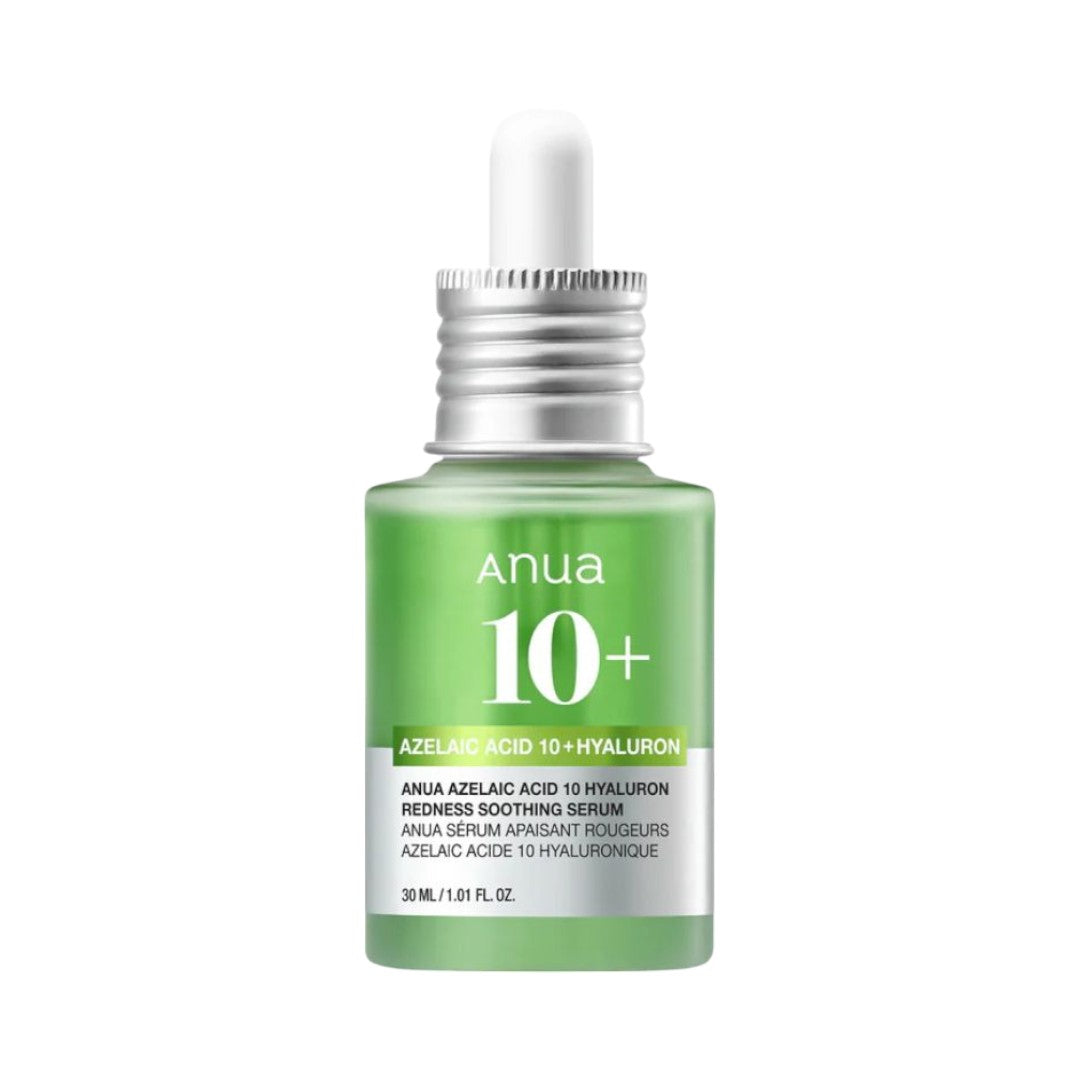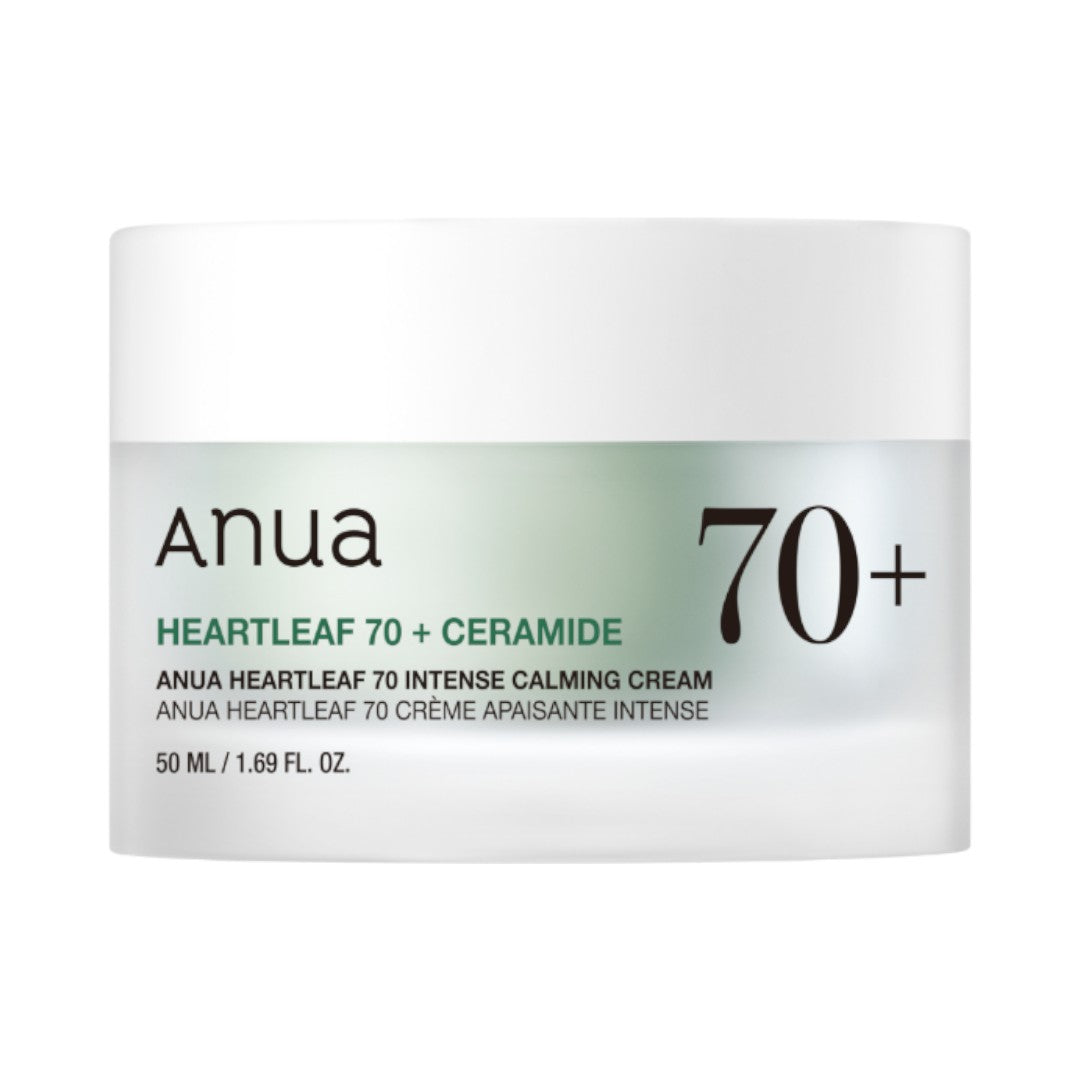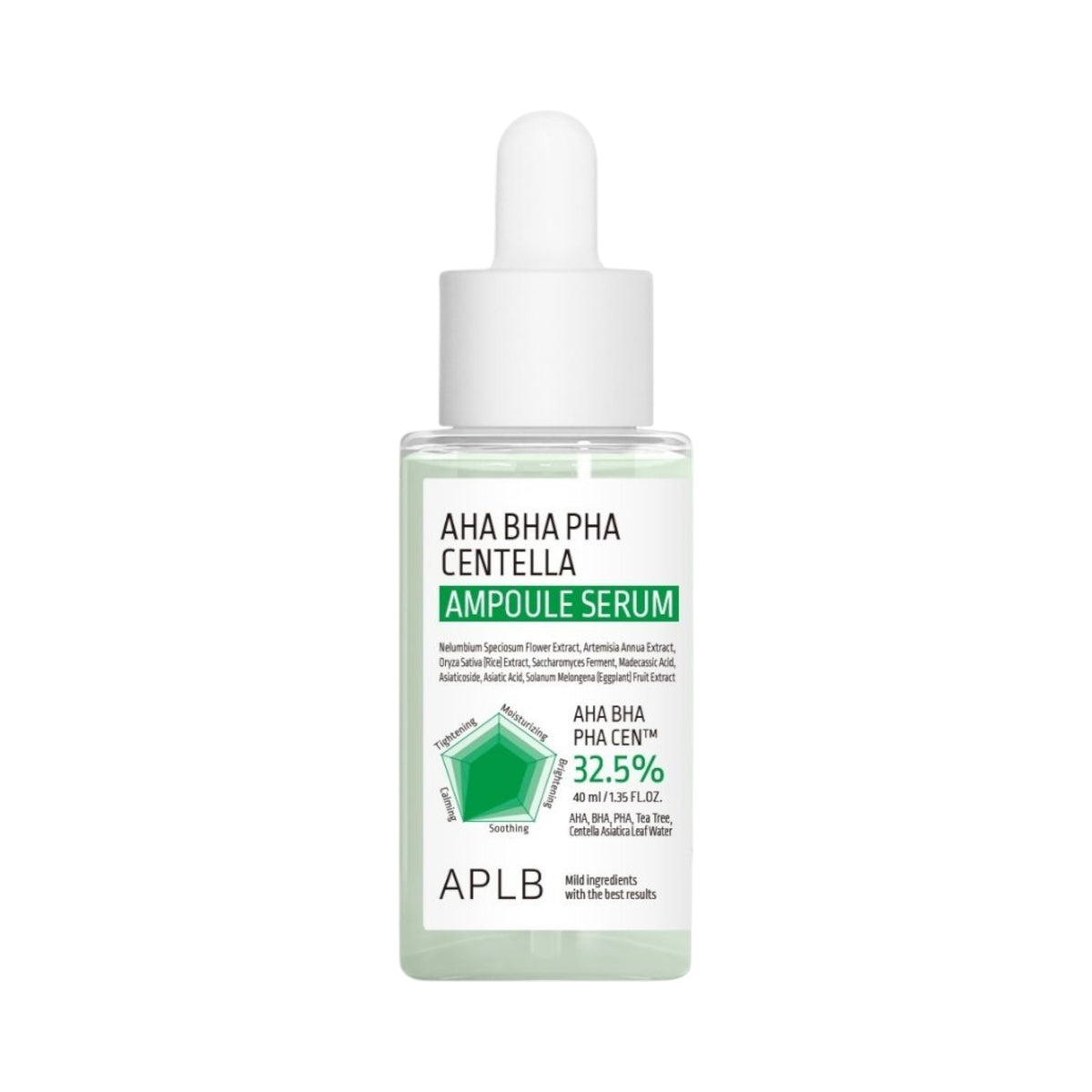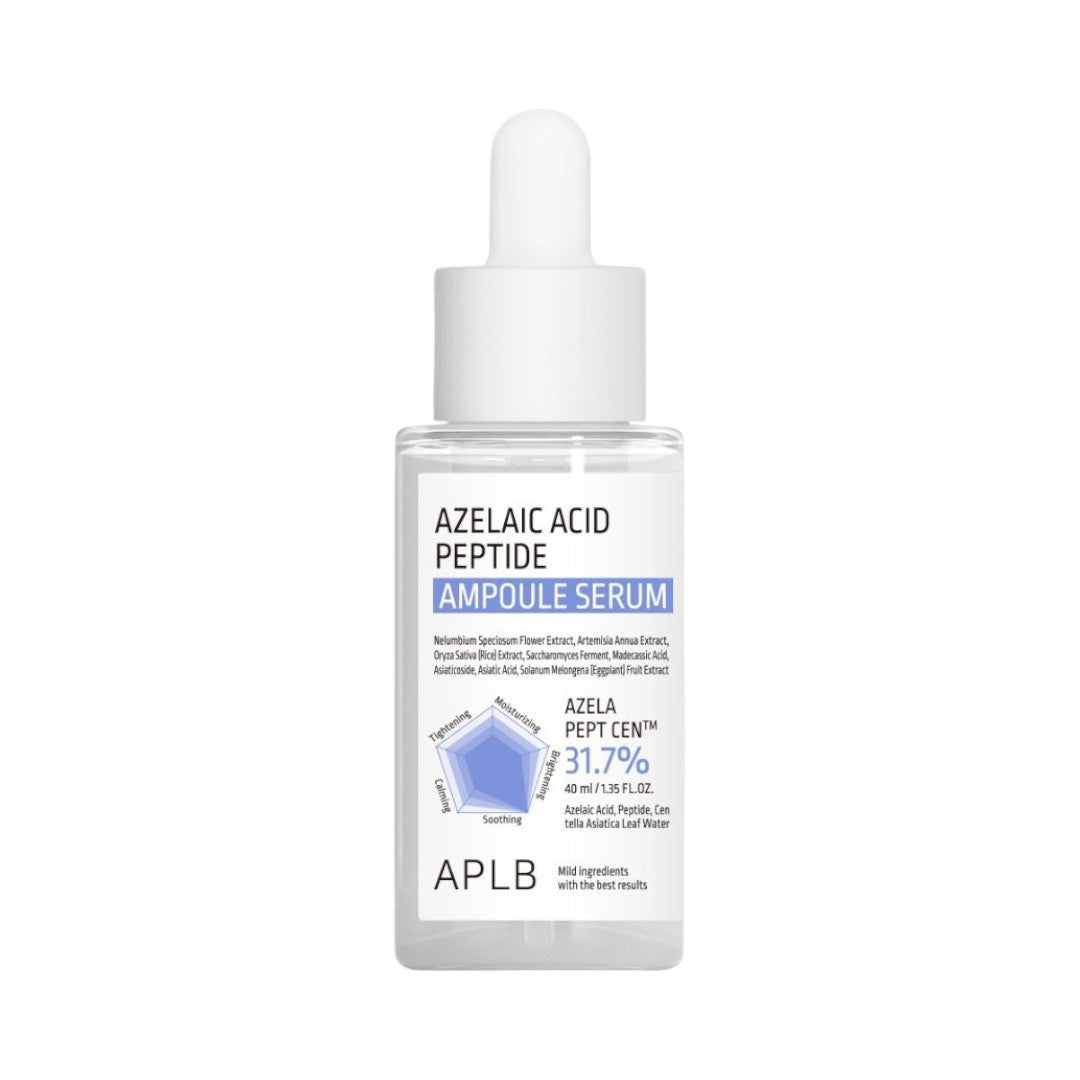
You know that feeling when you wake up in the morning and a new, uninvited "guest" waves back at you from the mirror? Treating acne-prone skin can be a real emotional rollercoaster. 🎢 We try countless products promising to "dry out" or "erase" the problem, but often the result is even more irritated, tight, red skin.
But what if I told you there’s a much gentler yet more effective approach?
Here comes the wonderful philosophy of Korean skincare (K-Beauty)! They don’t "fight" the skin but "work with" it. The goal isn’t to conquer the skin but to restore its balance.
In this article, we dig deep: we’ll see why this approach is different, which active ingredients are most effective, and how to build a routine that finally brings peace to your skin.
Why does acne-prone skin develop? – The reasons from a Korean perspective
K-Beauty doesn’t look for a single culprit but considers the whole picture. Behind acne-prone skin, there are usually several factors combined:
- Excess sebum production: For some reason (e.g., hormones, stress), your skin produces more oil than it should.
- Clogged pores: Excess sebum mixes with dead skin cells and forms a plug.
- Inflammation and barrier damage: This is the focus of K-Beauty! If your skin’s protective layer (the skin barrier) is damaged, it’s much more vulnerable to bacteria and irritation.
- Poorly chosen cosmetics: A cream that’s too heavy or a harsh cleansing oil adds fuel to the fire.
- Microbiome imbalance: The balance between the "good" and "bad" bacteria living on our skin is disrupted.
💡 The secret of K-Beauty: The goal isn’t to completely "eradicate" sebum (because the skin needs it!), but to normalize its production and restore balance.
The basics of the Korean routine for acne-prone skin – Step by step 🚀
The Korean routine isn’t about the number of steps, but about gentleness and mindfulness. Let’s see the 5 basic pillars!
1. Double cleansing – Gentle yet thorough cleansing
This is the alpha and omega of the evening routine.
- Why? The oily cleanser (step 1) dissolves makeup, sunscreen, and excess sebum (oil dissolves oil!). The water-based cleanser (step 2) removes the remaining dirt.
- Result: Perfectly clean pores without your skin feeling "squeaky" dry.
2. Exfoliation – BHA, AHA, and PHA in balance
Forget harsh scrubs! K-Beauty swears by chemical exfoliation, but done wisely.
- How? With low-concentration, gentle acids (like pore-cleansing BHA or super-gentle PHA), which you initially use only 1-2 times a week.
3. Essences and serums – The targeted treatment
This is the heart of the routine! 💖 This is where we deliver targeted actives.
- What to look for? Anti-inflammatory, soothing, and wound-healing ingredients. Such as Centella (Cica), Niacinamide, tea tree, or propolis.
4. Moisturizing – Why you MUST not skip it
This is the most common mistake! Many think that acne-prone skin is oily and doesn’t need moisturizing. A huge misconception!
- Why? If you dry out your skin, it panics and produces even more sebum as a defense. This is a vicious cycle.
- What to choose? Lightweight, gel-textured, non-comedogenic (won't clog pores) moisturizers.
5. Sun protection – An essential part of the routine ☀️
This is non-negotiable!
- Why? UV radiation increases inflammation (which worsens acne) and leaves ugly brown spots (PIH) on healed acne.
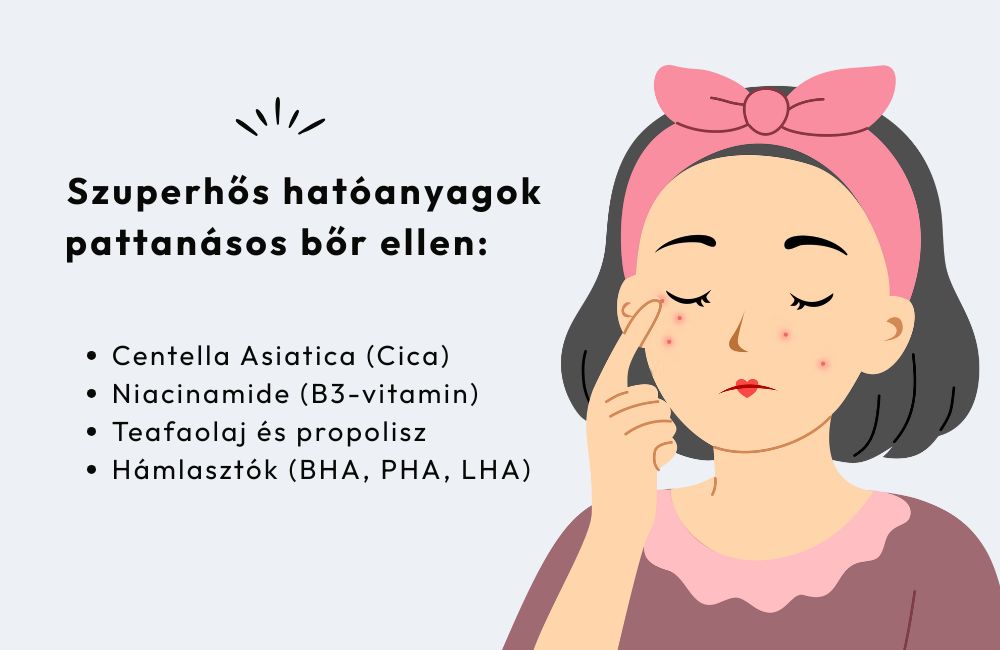
Superhero actives against acne-prone skin
K-Beauty loves these gentle yet effective ingredients:
- Centella Asiatica (Cica): 🌿 A true warm hug for your skin. It soothes, reduces redness, and boosts wound healing.
- Niacinamide (Vitamin B3): The great balancer. It regulates sebum production, refines pores, and fades post-acne marks.
- Tea tree oil and propolis: The natural antibacterial guards. They help keep acne-causing bacteria under control and soothe the skin.
- Exfoliants (BHA, PHA, LHA): The pore-clearing squad. They help prevent blockages.
- Fermented ingredients and probiotics: They strengthen the skin’s microbiome (your skin’s "flora") to make it more resilient.
What comes after acne-prone skin? – Treating acne scars and spots
The acne is gone, but a spot remains? 💔 The Korean routine considers this too. The goal is to speed up regeneration and fade pigmentation spots (PIH).
- How? Regular (but gentle!) exfoliation helps renew surface cells.
- Active ingredients: Niacinamide, Vitamin C, and Propolis are all brilliant for fading spots, while Centella helps improve texture.
Common mistakes in treating acne-prone skin (Don’t do this!) ❌
Less is sometimes more! Avoid these mistakes:
- Excessive exfoliation and drying: This only damages your skin’s protective layer.
- Too many new products at once: Introduce everything slowly, one at a time!
- Alcohol-based toners and strong fragrances: These unnecessarily irritate already inflamed skin.
- Skipping hydration: As we discussed, this is the biggest mistake!
The key to healing acne-prone skin: The skin barrier 🛡️
If you remember only one thing from this article, let it be this: the protective layer (barrier) of inflamed, acne-prone skin is always damaged. The key to healing is restoring this protective shield.
- Your helpers: Look for ingredients like ceramides, panthenol (vitamin B5), and madecassoside (one of Centella’s main active compounds). These help rebuild the skin.
Summary – The power of the Korean approach
See? Treating acne-prone skin doesn’t have to be an aggressive "battle." It’s much more about patient, mindful balance-seeking.
The Korean philosophy helps your skin find its own harmony again. The goal is clear, healthy, and balanced skin – gently but effectively.
💧 Cleaning + 🧴 Soothing + 💦 Hydrating + ☀️ Protecting = Happy Skin!